Water damage restoration and structural drying
When you have water damage, the most important thing you can do is call a professional restoration service to handle it promptly and thoroughly. After-hours EMERGENCY service is available.
Water damage
After-hours emergency service
We remove water and contaminants quickly to minimize damage.
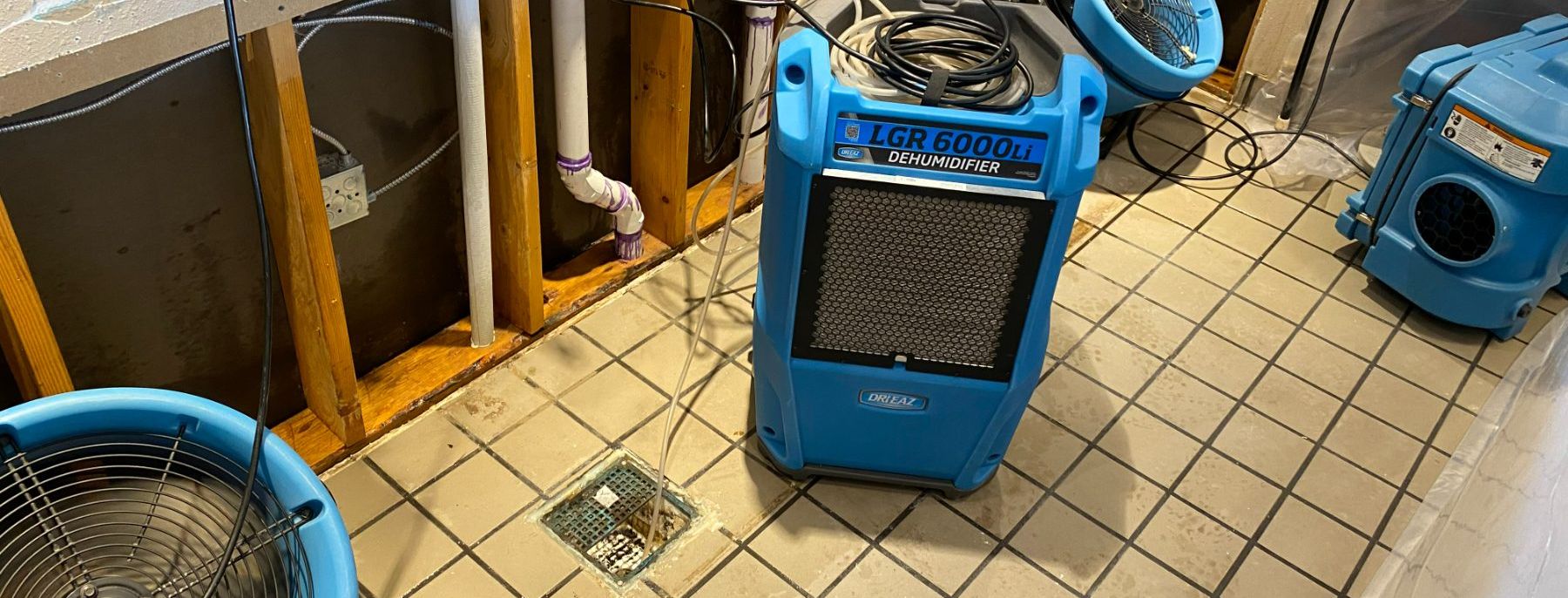
Professional equipment
Thermal cameras and moisture instruments to assess; high-powered fans, dehumidifiers and air scrubbers to dry.
We work with your insurer
We return your home or business to pre-loss condition with your insurance company.
Less stress
Drying documentation and direct billing to your insurance company, in many cases.
Structural drying
Moisture mapping
Thermal imaging and meters find wet subfloor, framing and drywall you can’t see.
Targeted drying
Air movers and dehumidifiers placed where the readings say they’re needed.
Daily monitoring
We check readings and adjust equipment until materials are back to dry standard.
Less tear-out
Drying in place saves drywall, cabinets and flooring that might otherwise be replaced.
Water damage questions
What happens when I call after hours?
First, a short conversation: where the water is coming in, whether you’ve shut off the supply, whether the power is still on in that area, and how deep it is. That decides what goes on the truck. Then a crew heads out from our shop on US-16 with extraction equipment, air movers, dehumidifiers and meters, and the same people come back to check the drying.
What happens on an after-hours call →How long does it take to dry out a flooded basement?
Three to five days of structural drying is typical. It takes longer when water got under a slab, into insulation, behind tile or into wall cavities. We come back daily to take moisture meter and hygrometer readings, and the equipment leaves when the readings say the structure is dry, not when the floor feels dry.
What slows drying down →Does homeowners insurance cover water damage?
Most South Dakota homeowners policies cover sudden, accidental water damage, like a burst supply line or a failed water heater. Slow leaks and long-term seepage are usually excluded, and your adjuster makes the final call. We document the damage with photos, moisture readings, thermal imaging and daily drying logs, and bill your insurer directly on most covered claims, so you generally handle your deductible instead of fronting the whole job.
How water damage claims work →Should I call my insurance company first, or you?
Call both, and don’t wait on one to call the other. Your policy expects you to prevent further damage, so standing water needs to come out now, not when the adjuster’s schedule opens up. Shut off the water, take photos before anything gets moved, and get a crew on the way.
What to do first →Can I dry it out myself with a shop vac and fans?
Not fully. A household wet vac pulls a few gallons off a hard floor, but it can’t lift the water that has soaked into the pad, the subfloor and the bottom of the drywall, and box fans mostly move humid air around. Moisture left in framing and behind baseboards is where mold problems start.
After a burst pipe, step by step →What area do you cover?
Rapid City and the towns within about an hour of our shop on US-16: Box Elder and the Ellsworth AFB area, Black Hawk, Summerset, Piedmont, Sturgis, Spearfish, Deadwood, Hermosa, Hill City, Keystone and Custer. Drying jobs need a visit every day, which is why the line sits where it does. Just outside it? Call and ask.
Why our service area stops where it does →